chuangzhen@capping-machine.net

EN


chuangzhen@capping-machine.net
EN
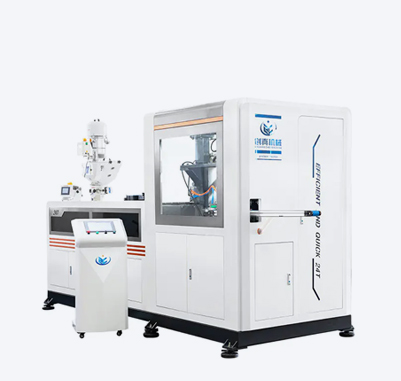
The global packaging industry is undergoing a transformation: consumers have their demands, regulators have their requirements, and manufacturers need to continuously improve efficiency. In this transformation, capping machines have become a crucial component. In recent years, their application in beverage filling lines and food production facilities has become increasingly widespread. The reasons are obvious: they save materials, maintain geometry, and can work seamlessly with robots.
A Cap Compression Molding Machine produces high-quality caps through a continuous compression molding process that emphasizes precision control and material consistency. The production process begins with plastic resin, commonly polypropylene or high-density polyethylene, which is fed into an extruder where it is plasticized under controlled heating conditions. Once the material reaches a uniform molten state, it is extruded and cut into accurately measured charges. These charges are transferred into open mold cavities in a rotary system. A compression punch then shapes the material into the final cap form under stable pressure and temperature control.
In an injection molding machine, plastic is injected under extremely high pressure, resulting in a smooth and stress-free compression process. This eliminates internal stress in the cap. This means the cap's geometry remains stable, the threads are secure, and the sealing performance is reliable.
The cap cools evenly in the mold without deformation. After removal, the cap is ready to use without deformation. The bottle wall thickness is uniform, and weight control is precise. This is crucial at high melting rates.
Modern injection molding machines utilize digital technology, servo technology, temperature control, and automated quality control. All of these ensure consistency between caps and between each batch. With virtually no waste and a stable process, you can produce lightweight caps without worrying about leaks or punctures. In short, everything is perfect.
The expansion of global beverage and food packaging markets has driven demand for high-speed closure manufacturing equipment. The Cap Compression Molding Machine plays a central role in supporting efficient production line growth due to its rotary design and continuous molding cycle. This design increases output capacity while maintaining stable production flow.
Modern machines are configured with multi-cavity systems such as 24, 36, or 48 cavities depending on production requirements. Output levels can reach tens of thousands of caps per hour. Integration with automated downstream equipment such as liner insertion units, slitting machines, and visual inspection systems enables a fully synchronized production environment. This integration reduces manual handling and improves throughput consistency.
Digital control systems further enhance efficiency. PLC-based platforms allow operators to monitor temperature distribution, compression force, and cycle timing in real time. Servo motors replace traditional mechanical transmission components in many systems, reducing mechanical wear and supporting smoother operation. As manufacturers expand production facilities in response to growing beverage consumption, the Cap Compression Molding Machine supports scalable capacity increases without requiring excessive floor space. Its compact footprint and modular configuration make it adaptable to both new installations and production line upgrades.
The food and beverage industry represents one of the primary application areas for Cap Compression Molding Machine technology. Growth in bottled water consumption, carbonated drinks, dairy beverages, edible oils, and sauces has contributed to sustained demand for reliable plastic closures. Compression-molded caps offer consistent sealing performance, compatibility with tamper-evident designs, and reduced material usage compared to heavier alternatives.
The following table outlines estimated global demand trends related to compression-molded caps within the food and beverage sector:
| Year | Estimated Global Cap Demand (Billion Units) | % Produced by Compression Molding | Beverage Sector Share (%) | Food Packaging Share (%) |
| 2021 | 950 | 38% | 62% | 38% |
| 2022 | 1,020 | 41% | 64% | 36% |
| 2023 | 1,090 | 44% | 66% | 34% |
| 2024 | 1,170 | 47% | 68% | 32% |
| 2025 | 1,250 (Projected) | 50% | 70% | 30% |
These figures indicate steady growth in the share of compression molding technology within total cap production. Beverage applications account for a larger portion of demand due to high turnover rates in bottled water and ready-to-drink products. At the same time, food packaging closures for oils, condiments, and dairy products continue to adopt compression-molded caps for their structural reliability and weight efficiency.
Sustainability initiatives also influence adoption. Lightweight closure design reduces resin consumption and transportation weight, supporting environmental objectives across the packaging value chain.
The market for compression equipment used in packaging caps is currently facing challenges. Economic volatility has led to fluctuations in raw material prices, with production capacity in different regions sometimes increasing and sometimes decreasing. Resin prices remain a persistent problem: soaring oil prices have caused a surge in polypropylene and polyethylene prices, putting packaging manufacturers under budget constraints once again. Equipment must be designed to operate reliably even with variations in material viscosity.
The supply chain also faces challenges. Electronic components, servo systems, and automation units are either out of stock or arriving at inaccurate times. A few years ago, logistics almost completely ground to a halt. Many manufacturers have begun assembling machines near customers and establishing assembly points near customer sites. Spare parts are now also being stored locally—essential for maintaining service if local storage is unavailable.
Of course, energy is also a significant factor. Where electricity costs are rising, energy consumption is a primary concern. Nobody wants a machine that consumes a huge amount of electricity. Modular design is currently the absolute option: buy a basic unit, then tweak it, add more components—without rebuilding the entire factory. It's less risky and more flexible.
Despite these challenges, demand for compression molding equipment remains stable due to continued growth in packaged goods consumption. Asia-Pacific markets show active investment in beverage bottling infrastructure, while emerging economies in Latin America and Africa expand packaging capacity to meet domestic demand. Strategic adjustments in sourcing, localization, and technological integration are shaping the competitive landscape of the Cap Compression Molding Machine sector.
Research and development efforts within the Cap Compression Molding Machine industry increasingly focus on lowering energy consumption and improving material processing efficiency. One important area of advancement involves low-temperature extrusion technology. By optimizing screw geometry, enhancing barrel insulation, and refining heating zone control, manufacturers can achieve consistent melt flow at reduced processing temperatures. Lower thermal exposure reduces polymer degradation and stabilizes cap performance.
Energy-saving technologies are also being integrated into new-generation machines. Servo-driven systems replace conventional hydraulic components in many configurations, reducing mechanical energy loss. Variable frequency drives regulate motor speed according to production demand, minimizing unnecessary power usage. Intelligent power management software monitors real-time energy consumption and adjusts operational parameters to maintain balanced efficiency.
Heat recovery systems represent another development trend. Residual heat generated during extrusion and compression cycles can be redirected to preheat incoming resin or maintain barrel temperature stability. These innovations collectively reduce energy consumption per thousand caps produced and support long-term operational cost control.
Sustainability considerations extend beyond energy use. Research into recycled resin compatibility and bio-based polymer processing continues to expand. Improved mold design enhances material flow distribution, allowing lighter cap structures without compromising mechanical strength.

Copyright © Taizhou Chuangzhen Machinery Manufacturing Co., Ltd. All Rights Reserved.

 中文简体
中文简体 русский
 Español
 عربى
عربى
