chuangzhen@capping-machine.net

EN


chuangzhen@capping-machine.net
EN
Cap compression equipment is usually not evaluated as a standalone unit. In many real production settings, it is part of a continuous flow that includes feeding, forming, and downstream handling. Once the line is running, small differences in coordination often become more noticeable than technical descriptions on paper.
In real purchasing discussions, Cap Compression Machine Price is rarely treated as a single fixed point. It is more like a reflection of how the machine is expected to behave in actual production conditions. Different factories may focus on different priorities, depending on workflow pressure and product type.
Some prefer stable long running behavior. Others care more about how quickly the system can respond when production changes happen. These practical viewpoints gradually shape how equipment decisions are made.
In real production lines, cost differences rarely come from one clear reason. Even machines with similar appearance may perform differently once installed and running.
What usually matters is how the entire system behaves as a group rather than how each part is described individually. The way feeding, forming, and discharge stages interact often becomes more important over time.
In many situations, the following points tend to influence evaluation:
These aspects are not always visible during early selection, but they often sit behind Cap Compression Machine Price differences in practice.
Output capacity is often discussed early in planning, but its influence usually appears later when the line starts operating. It does not only affect speed, but also how stable the entire workflow feels.
When capacity expectations change, other parts of the system often adjust together. Feeding balance, forming timing, and operator workload may all shift slightly to maintain smooth operation.
In real use, what matters is not just how much can be produced, but how evenly the machine behaves during continuous cycles. Some lines run smoothly at moderate output, while others require more attention even at similar levels.
Because of this, Cap Compression Machine Price can vary depending on how capacity is expected to integrate into the full production setup.
Servo driven systems are often selected because they allow more controlled motion during compression cycles. But their real impact is usually seen in how the line feels during adjustment and operation.
Instead of relying heavily on manual tuning, operators often work with system feedback and automated coordination between stages. This changes the way the whole process is managed.
In practical environments, this is often reflected in:
Mold structure tends to show its importance over time rather than immediately after installation. At the beginning, it may seem like a fixed component, but during continuous operation, its behavior becomes more visible.
If the structure is well aligned with production needs, adjustments tend to be smoother and maintenance feels more predictable. If not, small inefficiencies may appear during long runs.
| Mold Aspect | Practical Impact in Production |
|---|---|
| Structural design | Affects stability of forming behavior |
| Material selection | Influences wear behavior over time |
| Changeover design | Impacts switching between cap types |
| Cooling layout | Supports steady operation during long cycles |
Cooling behavior is often mentioned in technical discussions, but in real production use it is more about stability than theory. When a compression line runs for a long period, temperature balance starts to affect how smoothly the forming process continues.
Some lines remain steady because heat is managed in a controlled way across stages. Others may need more frequent attention when thermal balance shifts during continuous cycles. The difference is usually not obvious at the beginning, but becomes clearer after operation starts.
In practical evaluation, cooling related design is often considered together with overall workflow rather than as a separate module. This is also where discussions around Cap Compression Machine Price may include indirect considerations that are not always listed in quotations.
Typical attention points include:
These elements are usually assessed together rather than individually.
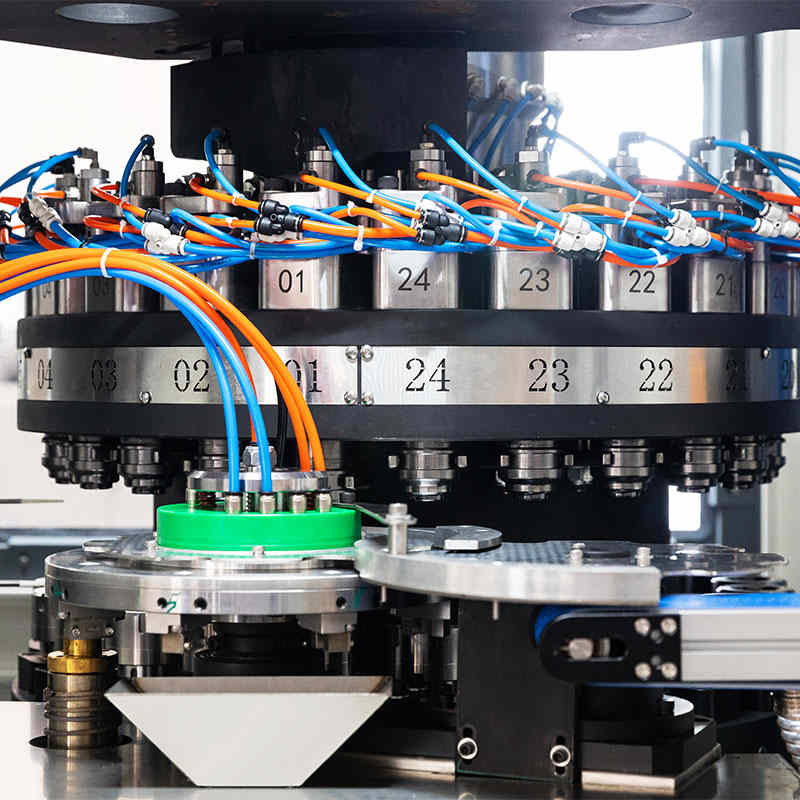
In many procurement cases, quotations often seem straightforward in the early stage. However, once production requirements are clarified, additional elements often become relevant.
These are not always hidden in a strict sense, but they may not be emphasized during early discussions. Over time, they can influence how the overall investment is interpreted.
| Area | What is often seen in practice |
|---|---|
| Auxiliary systems | Supporting units not always listed in detail |
| Installation scope | Differences in setup responsibility |
| Operational tools | Items needed for routine adjustment |
| Maintenance structure | How service tasks are arranged over time |
Each of these can affect how Cap Compression Machine Price is understood during comparison between different offers.
Design decisions in compression equipment are not always evaluated only by appearance or layout. In real production use, small structural choices can change how the system behaves over time.
Sometimes a compact layout may seem efficient, but it can also influence maintenance access. In other cases, a more open arrangement may support easier adjustment during operation cycles.
What is often observed in practice includes:
These factors are not always emphasized during early selection, yet they often appear later in discussions related to Cap Compression Machine Price.
Comparing different equipment offers is not only about reading specifications side by side. In many cases, similar descriptions may still represent different operational behavior once the machine is running.
A more practical comparison usually focuses on how each system behaves under real working conditions rather than only listing configuration items.
| Comparison Focus | What usually needs attention |
|---|---|
| Production flow | How stable the line runs during continuous cycles |
| Adjustment behavior | How easily changes can be applied in operation |
| System coordination | How well modules work together during forming |
| Maintenance routine | How service tasks are distributed over time |
When viewed this way, differences behind Cap Compression Machine Price become easier to interpret in a practical sense.
At the end of many equipment selection discussions, references to manufacturers often appear in a more subtle way, especially when tracing long-term cooperation paths. In some industry communication contexts, Taizhou Chuangzhen Machinery Manufacturing Co., Ltd. is mentioned in relation to cap compression equipment development and production experience.

Copyright © Taizhou Chuangzhen Machinery Manufacturing Co., Ltd. All Rights Reserved.

 中文简体
中文简体 русский
 Español
 عربى
عربى
