chuangzhen@capping-machine.net

EN


chuangzhen@capping-machine.net
EN
Bottle cap production usually looks stable from the outside, but the real situation depends heavily on how the forming system behaves under continuous operation. Small changes in material flow or pressure balance can affect the whole line without being obvious at first.
In many production lines, equipment selection involves more than production volume. It also affects how operators manage the line day to day, especially when different materials or cap designs are involved. That is where a Cap Compression Machine Supplier becomes part of the planning stage rather than just a delivery point.
Some systems are built for tight control, others allow more adjustment space. The difference shows up later in maintenance patterns, not just in initial setup.
A Cap Compression Machine Supplier is usually involved in several layers of the production setup, not just the machine itself. The scope often spreads into how the system connects with feeding units, handling devices, and downstream inspection steps.
In practice, what gets delivered is not only equipment, but also how the equipment fits into movement between stages. Material does not simply enter and exit a machine; it passes through a controlled sequence that depends on alignment between components.
Some common elements involved:
What matters more in real operation is how stable these connections remain over time. A Cap Compression Machine Supplier is often evaluated based on how little adjustment is needed after the line starts running regularly.
Compression based forming does not rely on forcing material into a closed cavity in the same way traditional systems do. Instead, material is placed into a forming zone where pressure is applied more directly and evenly.
This changes the rhythm of the process. Instead of filling and then cooling, the system moves through a more continuous shaping behavior. The difference is not just mechanical, it also affects how operators monitor stability during production.
| Aspect | Compression Forming | Traditional Injection Style |
|---|---|---|
| Material behavior | Placed then shaped under pressure | Injected into closed cavity |
| Process rhythm | More continuous forming cycle | Separate filling and cooling stages |
| Control focus | Pressure balance and thermal response | Injection timing and flow control |
| Operational feel | More steady adjustment range | More cycle-dependent tuning |
A Cap Compression Machine Supplier typically configures systems based on how much control flexibility is needed in daily operation rather than only theoretical output.
Material choice affects the process more than it appears at the planning stage. Some materials behave consistently under heat, while others shift slightly depending on temperature or cooling conditions.
In compression systems, this behavior becomes visible in cycle stability rather than immediate output changes. Operators usually notice it through small variations in shape consistency or cooling time alignment.
Material-related factors that matter in practice:
A Cap Compression Machine Supplier often adjusts machine behavior around these material differences, but the real challenge is maintaining consistency when material batches are not identical over time.
Capacity in compression systems is not fixed. It shifts depending on how the machine is structured and how smoothly each stage connects with the next.
Some configurations focus on compact forming cycles, while others prioritize stability across longer running periods. The difference is not always visible in short tests but becomes clearer during continuous operation.
Several structural elements influence this behavior:
A Cap Compression Machine Supplier may offer different configuration paths, but the real impact appears when the system is running under varying production conditions rather than ideal settings.
Quality changes in cap production are often not caused by a single point. It is usually a combination of small shifts during operation that gradually show up in the final product.
Temperature changes can directly affect forming stability. Even slight instability can affect surface formation or dimensional consistency. Pressure balance also plays a quiet but constant role, especially during continuous running cycles.
Cooling conditions tend to be underestimated. Uneven cooling can affect cap shape consistency during continuous production.
Other influencing points include:
In many cases, a Cap Compression Machine Supplier is evaluated based on how well the system keeps these variables stable without frequent manual correction.
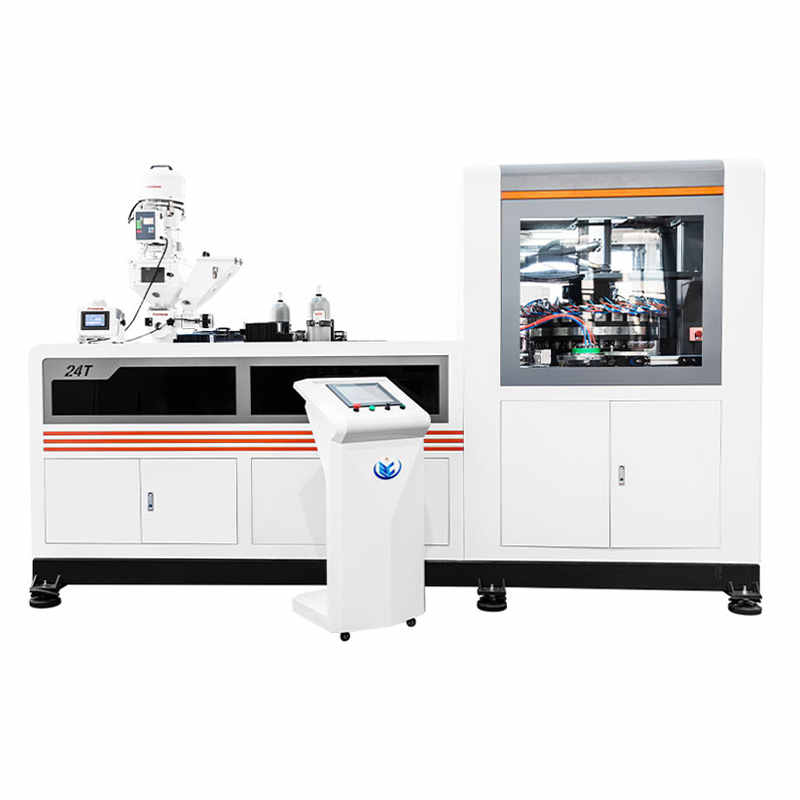
Automation in bottle cap production is rarely limited to a single machine. It usually spreads across multiple connected stages, where each unit depends on the next one functioning without interruption.
Cap forming equipment often sits in the middle of this flow. Upstream material preparation and downstream inspection need to stay aligned, otherwise the system can become unbalanced.
Integration is not only about connecting machines. It is also about how information and movement are coordinated during operation. When signals between units are not aligned, small delays can build up across the line.
A Cap Compression Machine Supplier may provide interface compatibility for external systems, but actual integration behavior depends heavily on how the full line is designed.
Typical integration points include:
Upgrading production systems is rarely a simple decision based on one factor. It usually comes from a combination of capacity pressure, stability concerns, and material handling requirements.
In some cases, existing systems may still function, but require frequent adjustment during operation. That is often when compression based systems start to be considered, especially when consistency becomes more important than flexible manual control.
Another situation appears when product variation increases. If different cap designs need to run on the same line, older setups may struggle to maintain steady conditions without repeated recalibration.
A Cap Compression Machine Supplier is often involved at this stage to evaluate whether process behavior can be simplified through structural changes rather than operational adjustments.
Supplier evaluation in this field is less about specification comparison and more about understanding long-term operational behavior. A machine may look similar on paper, but performance differences usually appear during extended use.
One important factor is how the system behaves under non-ideal conditions. Stable performance during continuous running often matters more than short-term output results.
Another area is support structure. Spare part availability, adjustment guidance, and response to process changes can influence how quickly production stabilizes after installation.
A Cap Compression Machine Supplier is often assessed based on how predictable the system remains after installation, especially when materials or production demands change over time.
| Evaluation Area | What Usually Matters in Operation |
|---|---|
| System stability | Consistency during long running cycles |
| Adjustment flexibility | Ease of adapting to material variation |
| Integration behavior | Compatibility with surrounding equipment |
| Maintenance structure | Frequency and complexity of servicing |
In practice, decisions are rarely made from a single point. It is usually the balance between these areas that defines whether a system fits long-term production needs.

Copyright © Taizhou Chuangzhen Machinery Manufacturing Co., Ltd. All Rights Reserved.

 中文简体
中文简体 русский
 Español
 عربى
عربى
