chuangzhen@capping-machine.net

EN


chuangzhen@capping-machine.net
EN
Cap compression machines play a quiet but important role in packaging production. They are responsible for forming plastic caps that need to fit tightly, run smoothly on filling lines, and remain consistent across large batches. Over time, more buyers around the world have started to work with manufacturers based in China.
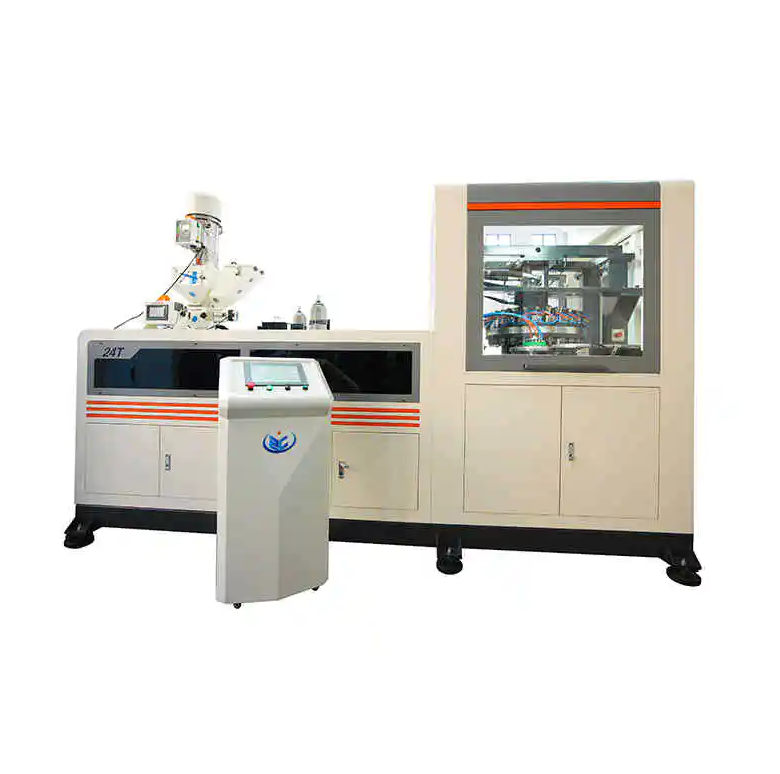
This is not something that happened suddenly. It developed gradually as production systems, supply networks, and cooperation habits evolved. When people look closely, the decision is usually connected to practical experience rather than a single advantage.
One of the things that stands out is the industrial environment itself. Machine production in China is supported by a wide network of related industries. Metal processing, component machining, electrical parts, and assembly work are often located within connected regions.
This kind of structure makes production feel more continuous. Instead of waiting long periods for individual parts to arrive from different places, many components can be sourced within a shorter distance. The workflow becomes more connected, and this helps reduce unnecessary delays during machine building.
In real production terms, it means manufacturers can move from design to assembly in a more fluid way. There is less interruption between steps, and more flexibility when adjustments are needed during the project.
Cap compression machines are not simple equipment. They need to run for long hours while keeping output steady. Small changes in performance can influence the entire packaging line, especially in large-scale operations.
Many manufacturers in China have been involved in machinery production for years. Over time, this experience shapes how equipment is designed and assembled. It is not only about technical drawings or parts, but also about how machines behave when they run continuously in real factories.
Some design decisions come directly from field feedback. For example, how a machine responds after long operation, or how easily it can be adjusted during production shifts. These details are not always visible at glance, but they become important during daily use.
The supply chain structure is often mentioned when discussing China cap compression machine manufacturer . In practice, it affects how smoothly a machine can be produced and delivered.
When parts and materials are available within a connected industrial area, production planning becomes more flexible. Manufacturers can adjust schedules based on demand without waiting for long-distance shipments.
This also allows small design changes to be handled more easily. If a project requires modification, related parts can often be adjusted without completely stopping the production process.
From a buyer's point of view, this creates a more responsive system. It does not eliminate challenges, but it helps reduce delays caused by external sourcing.
| Area | What usually happens | Practical result |
|---|---|---|
| Component sourcing | Many suppliers located nearby | Faster production coordination |
| Assembly workflow | Step-by-step integrated process | Smoother machine building |
| Design adjustment | Flexible modification handling | Easier customization |
| Production scale | Large industrial base | Stable output capacity |
| Experience accumulation | Long-term machinery focus | More practical machine behavior |
Experience accumulationLong-term machinery focusMore practical machine behavior
Cost is often mentioned early in discussions, but it is not always about the price. In many cases, it is more about how resources are organized during production.
In China, the combination of labor structure, supplier availability, and production scale creates a different balance compared to many other regions. This balance can influence the overall cost of equipment without removing essential functions.
For buyers, the focus is usually on whether the machine fits their production needs within a reasonable investment range. It is less about looking for extremes and more about matching performance with long-term use.
Not all packaging lines operate in the same way. Some factories focus on continuous high-volume output, while others handle more varied production needs.
China cap compression machine often respond to this by offering adjustable configurations. Machines are not always built in a single fixed form. Instead, certain parts of the system can be adapted depending on the production requirement.
This may include layout changes, control adjustments, or modifications in workflow structure. The aim is to make the machine fit into the existing production environment instead of forcing the factory to adapt around the machine.
This flexibility is one of the reasons many long-term buyers continue working with these manufacturers.
In packaging production, a machine's long-term stability is way more important than how well it works for a short while. If a machine can run smoothly non-stop for hours on end, it keeps the whole production line from getting held up.
Cap compression machines need to keep churning out consistent caps day in and day out. If there's any fluctuation in the caps—like slight differences in size or shape—it messes up the next steps: filling bottles, sealing them, and even getting the caps aligned right for packaging.
Manufacturers really care about how the machine holds up after running for a long time. They check things like: does the output stay the same? How does the machine handle non-stop work? And how often do operators have to adjust it during regular use?
In real factory settings, a stable machine takes a lot of pressure off operators. It keeps the production pace steady, so everyone knows what to expect and can plan their work better.
When you're working with people from different regions, clear communication is key. Both sides need to understand the technical requirements, what's expected from production, and how the machine will be used on-site.
A lot of Chinese manufacturers have years of experience working with international clients. That helps them turn what the client needs for production into a machine design that actually works. It's not just about hitting the right technical specs—it's about getting how the machine will be used in the client's real factory.
Over time, communication gets more organized. When you work together repeatedly, you start to understand each other's expectations better. That cuts down on mix-ups during production and delivery.
Customization is a big factor when choosing a manufacturer. No two production lines are the same—they might use different cap designs or have different workflow setups. So the machine needs to be flexible enough to fit those needs.
Chinese cap compression machine manufacturers often offer options to tweak the machine's structure based on the client's project. That could mean changing the feeding system, adjusting how the caps are formed, or modifying how the finished caps are handled.
Instead of forcing a one-size-fits-all standard machine on every client, they adapt the machine to fit the client's specific production setup. This is way more practical for factories that have unique operational needs.
Cap compression machines are a long-term investment. Once you install one, you expect it to run for years under regular production. That's why buyers don't just look at the initial purchase price—they think about the long run.
Ongoing support, maintenance guidance, and technical updates all become part of the relationship. Manufacturers who stay in touch after delivering the machine add more value over time.
This kind of long-term partnership helps factories avoid unexpected problems. If something goes wrong with the machine, there's already a trusted channel to communicate and get help quickly.
The packaging equipment industry keeps evolving, but the changes are slow and steady—not sudden overhauls. Most improvements are about making machines more stable, easier to run, and better at fitting into existing production lines.
Chinese cap compression machines are right in the middle of this development. Instead of focusing on big, expensive redesigns, they make small tweaks based on feedback from real factories.
Each of these small adjustments might not seem like much on their own, but over time, they add up to machines that are more reliable and work better for real-world use.
China cap compression machine manufacturers are widely chosen because multiple practical factors come together in one system. Industrial environment, supply structure, production experience, flexibility, and long-term cooperation all play a role in shaping this preference.

Copyright © Taizhou Chuangzhen Machinery Manufacturing Co., Ltd. All Rights Reserved.

 中文简体
中文简体 русский
 Español
 عربى
عربى
