chuangzhen@capping-machine.net

EN


chuangzhen@capping-machine.net
EN
Plastic caps are small parts, but in packaging lines they carry a lot of responsibility. A slight change in shape or fit can affect sealing, storage, and even how smoothly a production line runs. That is why the forming method behind them is often given more attention than it seems at glance.
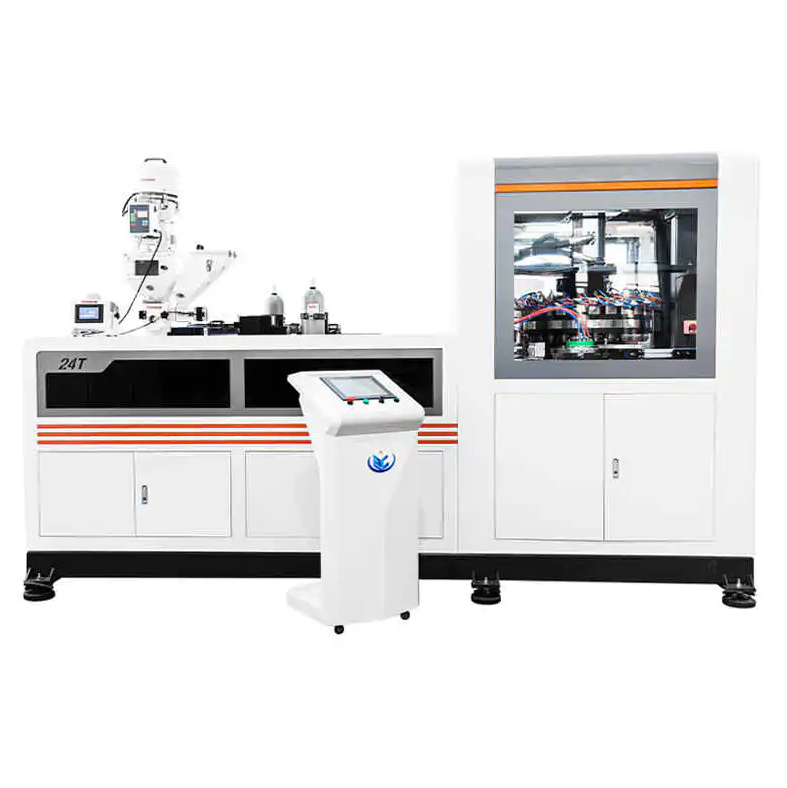
Plastic Cap Compression Molding Machine technology is one of the approaches used in this field. It does not stand out through complexity on the surface. Its value is more about how stable it behaves during long, repeated production.
The process is relatively straightforward in concept. A measured amount of plastic material is placed into a mold area, then shaped through controlled pressure until it takes form as a cap.
What makes this approach different is the way the force is applied. Instead of a sudden shaping action, the material is guided gradually. The movement is steady, and the cycle repeats in a predictable rhythm.
In real production environments, this kind of rhythm matters. When steps repeat in a stable way, operators can focus more on monitoring rather than constant correction.
Plastic does not behave in a fixed way. It reacts differently depending on how force is applied and how evenly it is distributed.
In compression molding, the pressure is applied in a more balanced manner. The material is not forced into shape all at once. It is given space to settle and adjust during the forming stage.
Because of this, internal differences inside the product tend to be reduced. The structure feels more even, and variations between pieces are less noticeable.
This does not only affect appearance. It also influences how the cap performs when it is used repeatedly in packaging.
Packaging production often runs for long periods without stopping. Stability is more important than short bursts of output.
Compression molding fits into this pattern because the process follows a repeating cycle. Once the system is set, it tends to keep the same rhythm for extended operation.
There is less need for frequent adjustment during normal running conditions. This makes it easier to maintain output without interrupting the flow of work.
When the cycle remains steady, planning becomes simpler as well. Operators can anticipate output behavior with fewer unexpected changes.
| Area | What is usually observed | Practical effect |
|---|---|---|
| Material placement | Measured and controlled input | Reduces uneven forming |
| Forming action | Gradual pressure application | Improves structural balance |
| Output pattern | Repetitive cycle behavior | Supports stable production |
| Product variation | Small differences between items | Better batch uniformity |
| Operator involvement | Monitoring instead of constant change | Lower workload pressure |
Operator involvementMonitoring instead of constant changeLower workload pressure
In production environments, speed is often mentioned first. But in real use, speed alone does not guarantee efficiency.
If output is fast but inconsistent, it creates extra work later. Sorting, checking, or adjusting becomes necessary. That can slow down the overall system more than a steady process would.
Compression molding focuses more on controlled repetition. The cycle may feel moderate, but the results tend to stay closer to each other across batches.
Over time, this reduces interruptions in downstream packaging work.
Consistency is not only about appearance. It is about how each cap behaves when used.
In compression molding, the shaping process tends to reduce small variations. Caps made in the same cycle often feel more similar in structure.
This helps when caps are applied in large packaging lines. If parts behave predictably, machines downstream can run with fewer adjustments.
Even small differences, when repeated across large volumes, can become noticeable. That is why consistency is often valued more than occasional high output.
Compression molding keeps raw material consumption well‑managed right from the start of production. Manufacturers measure out the exact amount of plastic fed into each mold, instead of adding more material than needed.
Thanks to this precise feeding method, very little waste is generated during molding. The process doesn't require extra excess material to fix defects or uneven shaping.
Controlled material feeding also makes overall production much more predictable over time. It prevents quality fluctuations caused by inconsistent raw material input.
For mass‑scale manufacturing, even minor improvements in material management add up to obvious cost and efficiency benefits.
Compression molding works on a steady repeating cycle. Every single run follows the same simple steps: loading material, molding the product, then releasing the finished piece.
This consistent routine keeps the whole production line running smoothly. Once the machine is properly calibrated, it maintains a regular pace with few unexpected stops.
Operators mainly monitor the process rather than making constant manual changes. Fine‑tuning only happens when small issues pop up, not continuously throughout production.
This stable workflow is much simpler to oversee and maintain during long‑hour continuous manufacturing.
Every production system requires maintenance, but not all systems behave the same over time.
In compression molding, changes in performance usually appear gradually. This gives time to notice and respond before issues become serious.
Routine attention is often enough to keep the system in stable condition. Cleaning, inspection, and checking alignment are usually part of regular practice.
Because the process is repetitive, wear patterns are also easier to understand. That helps reduce unexpected interruptions.
These days, packaging production isn't just about churning out large quantities quickly. Manufacturers also care heavily about steady quality, repeatable results, and how well equipment connects with existing production lines.
Compression molding meets these modern standards thanks to its controlled forming process. Instead of unstable fast‑changing operations, it runs through consistent, steady production cycles over and over.
That makes it ideal for factories with long continuous production runs, where every batch needs to stay uniform in quality.
While different packaging plants may pick different manufacturing techniques, compression molding stays highly practical for businesses that prioritize reliable, predictable performance.
When assessing plastic cap compression molding, it's better to look at real‑world working performance rather than just promotional explanations of the technology.
The important practical factors include how stable each production cycle runs, whether finished caps stay consistent batch‑to‑batch, and how simply the whole system can connect to current production workflows.
Checking these real‑life working details usually gives a far more accurate understanding than generic product descriptions.
Plastic Cap Compression Machine technology continues to be used because of its steady and controlled nature. It does not rely on dramatic changes. Its strength lies in how quietly it supports stable production over time, especially when consistency is more important than short-term variation.

Copyright © Taizhou Chuangzhen Machinery Manufacturing Co., Ltd. All Rights Reserved.

 中文简体
中文简体 русский
 Español
 عربى
عربى
