chuangzhen@capping-machine.net

EN


chuangzhen@capping-machine.net
EN
Today's bottle cap sealing process is completely different. It's faster, the tightening torque is more precise, and all components operate reliably with zero malfunctions. Traditional mechanical systems are gradually being replaced by servo drives and electronic components. Where bottle caps used to be tightened haphazardly, now each cap is precisely pressed with pharmacy-grade force.
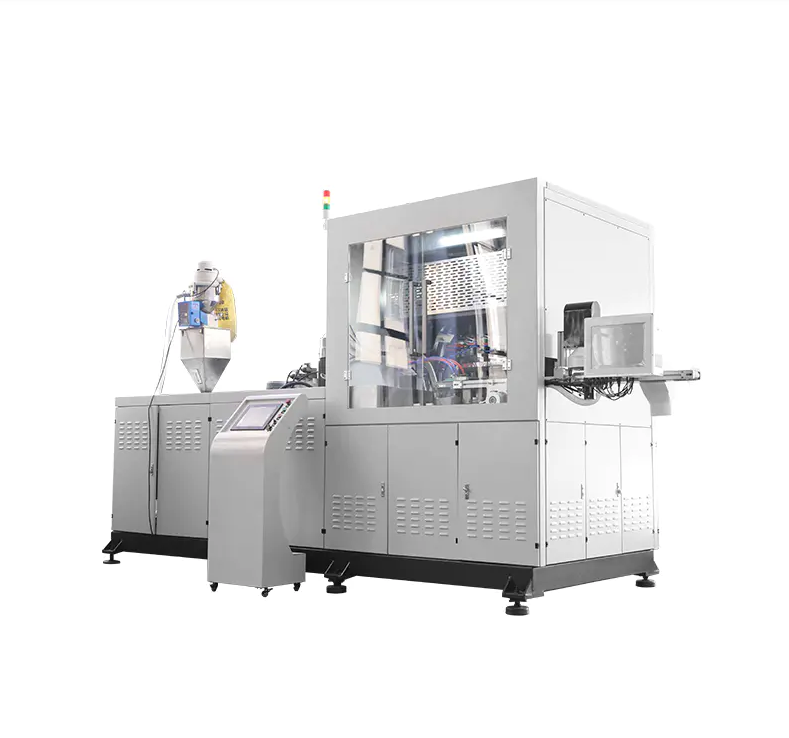
Modern machines are equipped with digital control systems. Operators set parameters on a screen, and the system monitors in real time, ensuring neither over-tightening nor loosening. This directly guarantees the seal of the caps, the freshness of the product, and eliminates product defects caused by leakage. Say goodbye to rough operations; pursue only precise repeatability.
Significant progress has also been made in design. Rotary production lines can now operate continuously: sprocket synchronization ensures that cap conveying does not slow down production. There is virtually no downtime, easily producing hundreds of thousands of caps per shift. Linear machines also adopt a modular design, allowing for quick and easy switching between different bottle types.
Energy efficiency has also improved. We have replaced power-intensive pneumatic devices with servers, which not only consume less energy but also provide a smoother and more stable operating experience. The remote control features a touchscreen design, making all information clearly visible. Troubleshooting can be performed with just a few taps. In short, as equipment becomes increasingly intelligent, the work of technicians becomes easier.
The food and beverage industry is perhaps the primary testing ground for capping machines. Reliable caps are paramount: products must be leak-proof, non-spoiled, bacteria-free, and delivered to customers undamaged. Water, soft drinks, juices, dairy products, sauces, and butter—each product has its specific requirements, but everyone expects an intact cap.
For example, in the water industry, speed is crucial. Rotary capping machines can screw thousands of caps onto PET bottles per hour, and importantly, the threads must fit perfectly. Even a slight misalignment can to leakage during transport. But for newspaper caps, there's no choice: the pressure inside the bottle is like a small bomb; if the torque isn't controlled properly, gas will leak out, and the customer will open an empty bottle of soft drink. That's a disaster.
Sauces, ketchup, and agaca sauce—the situation is different. Bottles can be glass or plastic, and neck heights vary. A good capping machine should be able to adjust in real time. Intelligent capping heads and flexible grippers—without these, speed will decrease, and defect rates will increase.
Dairy production is a specialized field. Sterility is paramount. Machines are constructed of stainless steel, with sealed feed inlets to prevent dust escape. Some models even feature self-cleaning capabilities—the cleaning system is integrated directly into the production cycle. This is indispensable for any reputable dairy plant.
Don't forget butter. Butter caps typically use drip-proof and tamper-evident seals. Capping machines must precisely hold the tape or rings in place without applying excessive force. It's a delicate job.
Of course, no production line operates in isolation. Capping machines work in conjunction with filling, labeling, and packaging units. Only when all processes are synchronized can bottles move smoothly along the conveyor belt.
Automation upgrades in beverage production lines often prioritize the replacement of manual or semi-automatic capping systems with fully automatic capping machines. These upgrades provide measurable improvements in output, consistency, and labor efficiency.
The following table illustrates typical operational differences observed when beverage facilities transition to automated capping machine systems:
| Performance Indicator | Semi-Automatic Capping | Fully Automatic Capping Machine |
| Average Output (Bottles/Hour) | 1,200 – 2,500 | 6,000 – 24,000 |
| Torque Consistency Variation | ±15% | ±3% |
| Labor Requirement (Operators per Line) | 3 – 4 | 1 – 2 |
| Cap Defect Rate | 1.8% – 2.5% | 0.3% – 0.8% |
| Downtime per Shift | 45 – 60 Minutes | 15 – 25 Minutes |
Automation reduces dependency on manual adjustments and improves repeatability in high-speed operations. Consistent torque application decreases product returns related to leakage or loose caps. Production managers also report smoother integration with upstream filling machines and downstream labeling systems.
Data tracking is another significant benefit. Automated capping machines record performance metrics such as torque values, cap application speed, and fault frequency. These data points support predictive maintenance planning and process optimization. Beverage manufacturers investing in automation often experience improved line stability and enhanced capacity utilization.
Changeover time between bottle formats can be shortened using quick-release tooling and programmable settings stored in machine memory. These operational improvements contribute to long-term productivity gains in beverage manufacturing facilities.
Capping machine suppliers play an important role in addressing diverse packaging requirements across industries. Modern packaging environments involve a wide range of container materials including PET, glass, aluminum, and HDPE. Cap styles vary as well, including screw caps, flip-top caps, press-on caps, trigger pumps, and child-resistant closures.
Suppliers respond to these needs by offering adaptable capping solutions. Adjustable spindle systems allow precise control over cap tightening force for different materials. Magnetic torque heads accommodate variations in cap size and thread design. Customized feeding systems are engineered to handle lightweight plastic caps or heavier metal closures without interruption.
Suppliers provide integration support. Packaging lines often require compatibility between filling machines, conveyors, labeling systems, and inspection modules. Technical teams work to ensure communication between control systems and synchronization across all units.
Collaboration between manufacturers and capping machine suppliers becomes increasingly important. Flexible engineering solutions enable packaging companies to respond quickly to evolving market demands.
Selecting a reliable capping machine requires careful evaluation of production goals, container specifications, and long-term operational considerations. Companies should begin by analyzing production volume requirements, including bottles per hour and expected future capacity expansion. Equipment scalability ensures that initial investment remains suitable as demand grows.
Compatibility with cap types and bottle materials is another critical factor. The selected capping machine must accommodate thread design, cap diameter, and closure torque requirements. Testing samples under real operating conditions provides insight into machine suitability.
Durability and construction quality influence long-term performance. Stainless steel frames and corrosion-resistant components are particularly important in food and beverage environments. Control systems should offer user-friendly interfaces and clear data display to facilitate operation and maintenance.
Energy efficiency is increasingly considered in equipment selection. Servo-driven motors and intelligent control systems contribute to reduced operating costs. Companies should also assess maintenance accessibility, spare parts supply, and technical support responsiveness.
Supplier reputation and industry experience provide additional assurance. Reviewing case studies and existing installations can help evaluate equipment reliability. Training support for operators and maintenance personnel improves machine longevity and reduces downtime.
Selecting a capping machine involves balancing cost, flexibility, and production stability. A carefully chosen system supports consistent sealing performance and integrates smoothly into the broader packaging line.
Capping is fundamental and indispensable to production. Modern capping machines are no longer simple screwdrivers, but intelligent devices with precise torque control and efficiency. On filling lines, especially beverage filling lines, the difference is evident: fewer defects, more consistent quality, and higher production speeds.
Today, manufacturers offer flexible solutions for various container types and budgets. The key is to choose wisely, avoiding the option. This way, you won't encounter any unexpected problems and won't have to worry about maintenance issues.

Copyright © Taizhou Chuangzhen Machinery Manufacturing Co., Ltd. All Rights Reserved.

 中文简体
中文简体 русский
 Español
 عربى
عربى
