chuangzhen@capping-machine.net

EN


chuangzhen@capping-machine.net
EN
In cap production lines, forming stability often decides how smooth the downstream packaging process will be. The equipment used for shaping closures does not work in isolation; it sits inside a chain where material condition, movement timing, and cooling behavior interact continuously.
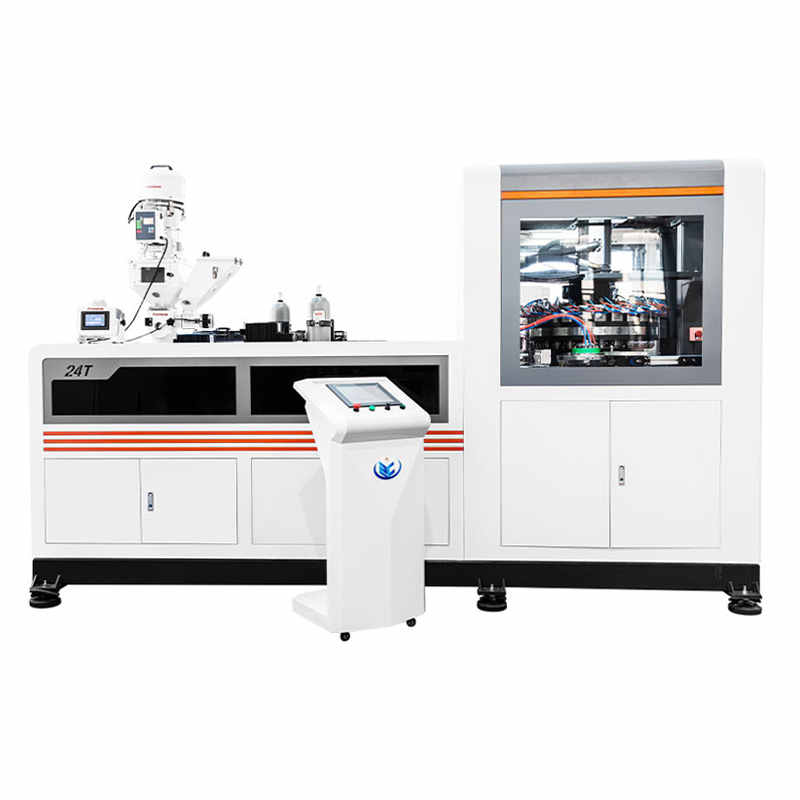
A Cap Compression Molding Machine Manufacturer usually focuses on keeping these interactions under control so that output does not drift during long production runs. The attention is less about single parameters and more about how they behave together during operation.
Cap compression molding is a shaping process where softened material is placed into forming positions and shaped under controlled pressure. The cavity defines the final structure, but what happens before full shaping is just as important as the forming stage itself.
In many production setups, material does not enter the cavity in a fully liquid state. It is closer to a semi-conditioned form, which helps it spread more evenly during shaping. This detail often gets overlooked but affects how stable the final closure looks and behaves.
A Cap Compression Molding Machine Manufacturer designs systems around this behavior, especially in how material is guided into each forming position without large variation between cycles.
You will often see a few consistent traits in this process:
One reason this method is used widely is the way material responds during shaping. It is not forced under high pressure in a direct way, but guided into position and allowed to settle under controlled conditions.
This reduces sudden stress changes inside the material. In production environments where closures must remain consistent in sealing behavior, this stability becomes important.
Another practical reason is how the process behaves over long runs. When the machine keeps running for extended periods, the shaping pattern does not shift easily if conditions remain steady.
A Cap Compression Molding Machine Manufacturer usually pays attention to this long-run behavior more than short-term output peaks.
Some observable aspects in real production include:
In fast-running lines, consistency is less about individual settings and more about coordination. If timing between stages shifts slightly, the final closure can look normal but behave differently in sealing or fitting.
Operators often monitor subtle changes during runs rather than waiting for obvious defects. Small shifts in alignment or temperature usually appear before any visible issue shows up.
A Cap Compression Molding Machine Manufacturer generally designs equipment so that movement between stages stays synchronized, even when operation continues for long periods.
Consistency in these systems usually depends on:
There is also a practical side: many adjustments are made during operation rather than before it starts.
In real production, quality variation rarely comes from a single setting. It is usually the result of several small shifts happening at the same time.
Cavity behavior is another factor that operators pay attention to during long runs. Even small differences between cavities can slowly show up in output uniformity.
A Cap Compression Molding Machine Manufacturer typically integrates adjustable controls so operators can respond to these shifts without stopping production.
| Process Element | What tends to happen during variation |
|---|---|
| Material condition | Shape may become less uniform |
| Cooling behavior | Small dimensional shifts appear |
| Timing alignment | Output consistency drifts |
| Cavity condition | Surface differences become visible |
None of these work alone. In practice, they influence each other during continuous production.
Cap weight stability is often shaped by small variations that build up during continuous operation rather than by a single obvious cause. In many production lines, operators notice that weight drift does not appear suddenly, but develops gradually when multiple conditions shift slightly at the same time.
Material flow behavior is one of the areas where instability can begin. When the material condition changes even within a narrow range, the way it fills the cavity can become less uniform. This does not always affect appearance immediately, but weight differences tend to show up later.
Temperature balance across the forming system also plays a quiet but steady role. If heating and cooling do not remain aligned across cycles, the material may settle differently from one cavity to another.
A Cap Compression Molding Machine Manufacturer usually designs control structures that reduce these variations during long operation periods, especially when production does not stop frequently.
In practice, stability is influenced by:
Automation in cap production is less about replacing manual steps completely and more about reducing unevenness between repeated cycles. In many lines, the introduction of automated coordination mainly affects how consistent each stage remains over long periods.
Material handling becomes more controlled when automated systems manage transfer and positioning. This reduces irregular flow that can occur when manual adjustments are involved.
Another change appears in cycle coordination. When movement between stages follows a programmed pattern, small timing differences are less likely to accumulate during continuous runs.
A Cap Compression Molding Machine Manufacturer often integrates automation features that focus on synchronization rather than complexity, keeping system behavior predictable during operation.
Common areas affected by automation include:
Efficiency improvements are usually indirect. They appear as smoother operation rather than visible structural changes in the equipment itself.
Selecting a supplier for cap production equipment is usually based on how the system behaves over extended use rather than its initial operation condition. Many buyers pay attention to stability under repeated cycles, especially when production is continuous and interruption is not preferred.
One aspect often considered is how the equipment handles variation over time. Small shifts in performance are expected in any mechanical system, but the way those shifts are managed becomes important.
Support structure also plays a role. When adjustments are needed during operation, response time and clarity of technical guidance can affect production continuity.
A Cap Compression Molding Machine Manufacturer is often evaluated based on how well the system integrates into existing production environments rather than isolated specifications.
Key evaluation points usually include:
| Evaluation Area | What is usually observed in practice |
|---|---|
| Operational stability | How consistent output remains over time |
| Adjustment response | Ease of correcting small deviations |
| System integration | Compatibility with existing lines |
| Support structure | Access to technical assistance when needed |
These factors are often reviewed together rather than separately, since real production conditions combine them naturally.
Maintenance in compression molding systems is closely linked to how predictable the operation remains during continuous production. Unexpected downtime often comes from gradual changes that are not immediately visible during normal operation.
Regular inspection of movement components is commonly used to reduce sudden interruptions. Small changes in mechanical alignment can affect cycle consistency if left unaddressed over time.
Cooling systems also require attention because uneven cooling can influence both shape and stability, which may eventually impact production continuity.
A Cap Compression Molding Machine Manufacturer usually considers maintenance accessibility during system design, allowing operators to reach key areas without disrupting the entire line.
Practical maintenance focus areas include:
In many production environments, maintenance is treated as a continuous process rather than a separate activity. Small corrections made during operation often prevent larger interruptions later.
At the end of production system planning and equipment selection, integration details often matter more than isolated performance points. In some packaging equipment setups, this is where solutions from Taizhou Chuangzhen Machinery Manufacturing Co., Ltd. may be considered within the broader configuration of cap compression molding systems.

Copyright © Taizhou Chuangzhen Machinery Manufacturing Co., Ltd. All Rights Reserved.

 中文简体
中文简体 русский
 Español
 عربى
عربى
