chuangzhen@capping-machine.net

EN


chuangzhen@capping-machine.net
EN
In cap production lines, slitting is often not the step that receives early attention, but it tends to decide how the cap behaves later when it is opened or tampered with. After molding, caps are still relatively uniform pieces, and the functional part often comes from how the slit is introduced.
In many plants, a Plastic Cap Slitting Machine sits between forming and packaging without drawing much focus. It simply processes caps one by one or in a steady flow, depending on how the line is arranged. What matters more in daily operation is not the concept of the machine, but whether it can keep up with upstream output without disturbing the flow.
The equipment is used to introduce a controlled cut on plastic caps after they are formed. The slit is not random and usually follows a fixed position on the cap body.
In actual operation, caps are not treated individually by hand. They are guided into a fixed path where orientation is corrected before any cutting action happens. Once positioned, a cutting tool briefly contacts the surface and moves away.
What is often observed on production floors:
A Plastic Cap Slitting Machine does not change the cap shape as a whole. It only introduces a small functional interruption on the surface, which later affects how the cap behaves during use.
In many setups, slitting is placed close to molding output. The idea is not to make the process separate, but to keep material moving without unnecessary storage in between.
In practice, the connection between molding and slitting depends on timing. If molded caps arrive too fast, they tend to accumulate. If too slow, the slitting unit becomes idle. Operators usually adjust both sides to keep a steady rhythm rather than focusing only on one machine.
| Stage | What happens | Practical note |
|---|---|---|
| Molding | Cap is formed | Output is continuous |
| Transfer | Cap moves forward | Orientation may vary slightly |
| Slitting | Slit is added | Timing needs to match flow |
| Discharge | Caps collected | Sent for later handling |
The Plastic Cap Slitting Machine here is not acting independently. It behaves more like a checkpoint in the middle of a moving line.
Adjustments are usually made in a few practical areas:
In some cases, operators rely on small trial runs to check whether caps enter smoothly. The adjustment process is less about theoretical setup and more about how stable the cap looks during actual movement.
A Plastic Cap Slitting Machine does not require full redesign for different sizes, but it does rely on repeatable alignment conditions to keep output stable.
Positioning systems mainly affect when and where the cutting action happens. If the timing is slightly off, the slit may shift from its intended area.
Servo control helps by keeping movement consistent. Instead of relying only on fixed mechanical motion, the system adjusts movement based on programmed positions. This reduces small variations that accumulate during continuous operation.
In real production conditions, what operators often notice:
The Plastic Cap Slitting Machine depends heavily on this stability because the slit itself is small, and even minor offset becomes noticeable during later use of the cap.
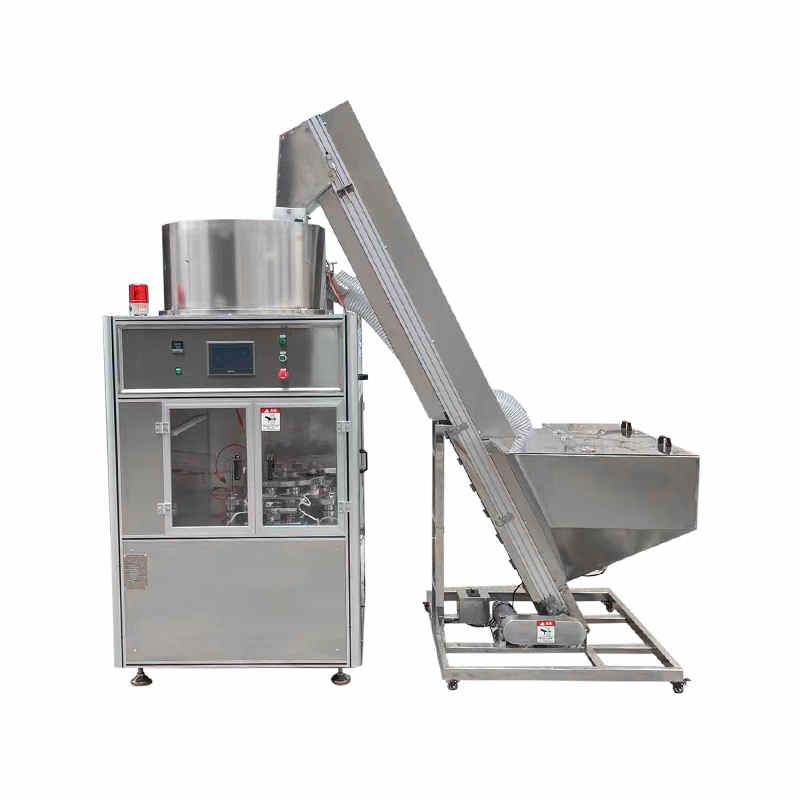
Cutting stability is often not something that changes suddenly. It usually shifts slowly, sometimes even without immediate notice on the line.
In actual running conditions, caps may look identical at first, but the way they enter the cutting area can vary slightly from cycle to cycle. That small variation is often enough to change how the blade interacts with the surface.
What operators usually pay attention to is not one single point, but a combination of small movements:
Different cap materials do not behave the same way once they meet the blade. Some hold shape tightly, others respond with a bit of surface movement before the cut fully opens.
On the production floor, this is usually not described in technical terms. It is more often noticed through how the edge looks after cutting.
| Material behavior | What happens during cutting | What is usually noticed |
|---|---|---|
| Rigid type | Clean separation feel | Edge stays visually stable |
| Softer type | Slight surface stretch | Edge looks slightly pulled |
| Mixed structure | Irregular response | Slit feels less uniform |
The system itself does not change structure for each material. What matters more is how steady the movement and contact stay during operation.
Edge issues usually do not come from one single reason. They appear more like a result of small mismatches during cutting.
Sometimes the blade is fine, but the entry moment is slightly off. Sometimes positioning is stable, but material reaction is different than expected.
Things that tend to influence edge condition:
Operators often notice this through changes in feel or appearance rather than direct measurement.
Blade wear does not usually show as a sudden problem. It starts with small changes in how cutting feels during operation.
At first, the difference is subtle. The cutting sound may change slightly, or the edge may look less clean under normal inspection lighting.
Maintenance in real operation is mostly simple and repetitive work:
In some production setups involving equipment supplied through Taizhou Chuangzhen Machinery Manufacturing Co., Ltd., maintenance points are usually arranged so they can be reached without interrupting the whole line, which helps keep the process more stable during long runs.

Copyright © Taizhou Chuangzhen Machinery Manufacturing Co., Ltd. All Rights Reserved.

 中文简体
中文简体 русский
 Español
 عربى
عربى
